Reading Time: 6 minutes

The Same Question, Different Wrapper
Every few months, a new ETF shows up with a story attached to it. A single-stock fund that promises double the daily return of a company everyone’s talking about. A “buffer” fund built around a headline event. An options-income fund yielding a number that sounds too good until you read the fine print.
The wrapper changes. The pitch doesn’t.
We see the pattern often enough that it’s worth naming plainly: some funds exist because investors wanted a strategy. Others exist because a marketing team wanted a news cycle. Telling them apart isn’t about being cynical toward ETFs as a structure. It’s about learning to read what’s actually inside one.
What Bogle Got Right
There is nothing wrong with the ETF structure itself. Jack Bogle, founder of Vanguard, built his career on the idea that ordinary investors deserved low costs and broad diversification instead of being sold complexity they couldn’t price. I received private correspondence from him once, and it only reinforced what his public record already shows: he believed the retail investor’s greatest enemy wasn’t the market. It was fees, and it was noise.
His most famous line still holds up: “Don’t look for the needle in the haystack. Just buy the haystack.”
That idea — index the whole thing, keep costs low, let time do the work — is the opposite of what today’s headline-driven products are selling. The structure Bogle helped popularize has been used by some to democratize investing, and by others to package speculation in a wrapper that looks respectable.
The Wisdom of the Farmer
I think we’re built for greed. Not in some rare, unusual way — it’s basic human wiring. And a good chunk of the financial industry is built to find that wiring and unfortunately exploit it, because urgency, fear, and excitement sell better than patience does.
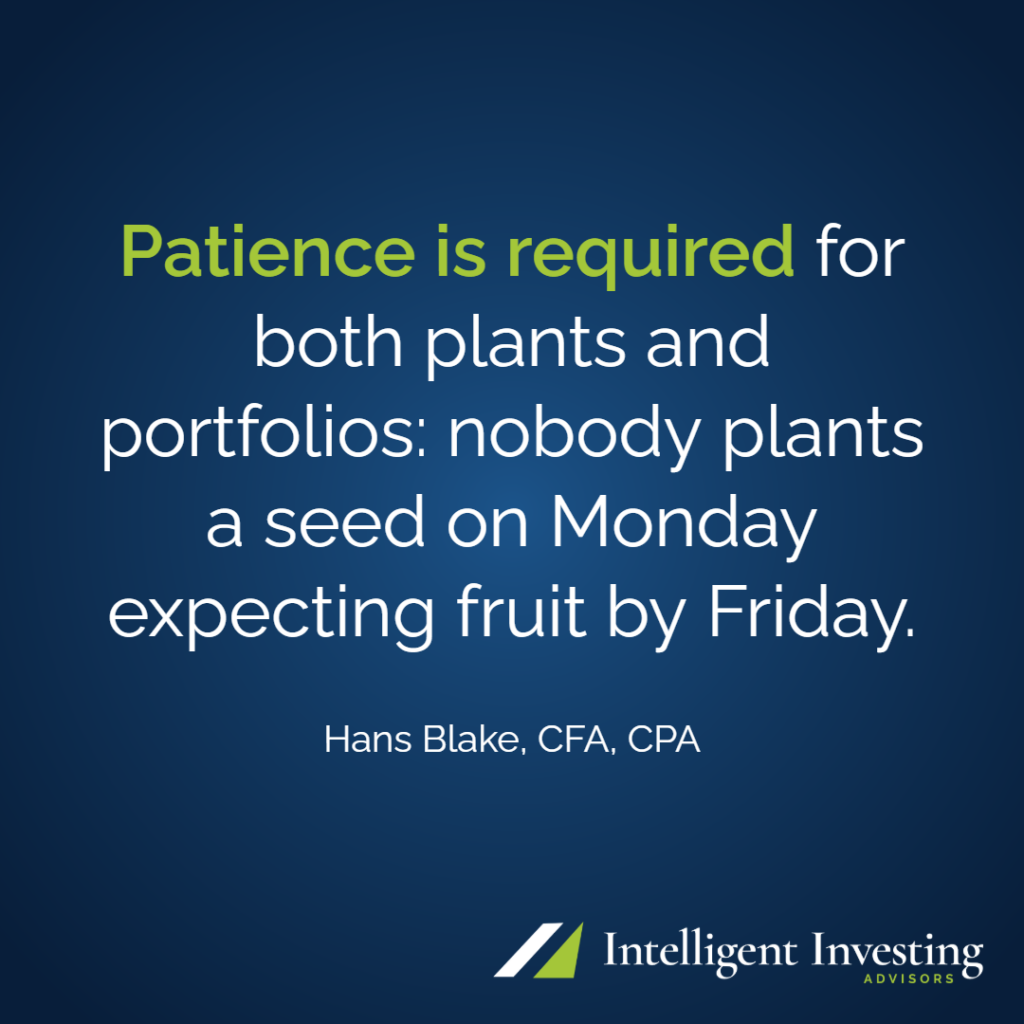
There’s an old image of a farmer that I keep coming back to. He plants. He waters. He weeds. And only after a season has passed does he harvest. Nobody plants a seed on Monday expecting fruit on Friday. That would be foolish, and everyone recognizes it as such when it’s put in agricultural terms.
But put the same idea into a financial product — a fund that promises a fast, outsized outcome tied to this week’s news — and suddenly it doesn’t sound foolish. It sounds exciting. That’s the trick. The underlying math hasn’t changed. Only the framing has.
A Simple Test: Strategy or Story?
So how do you actually tell the difference between a fund built for holding and a fund built for headlines? You don’t need a finance degree. You need to look at the structure and ask a few honest questions.
What is it actually trying to do?
Read the fund’s stated objective in plain language. If it’s something like “track the total return of a broad, diversified index,” that’s a strategy. If it’s “provide leveraged exposure to the daily performance of a single security” or “generate high monthly income through options on a narrow basket,” that’s a bet dressed up as an income plan.
Is the underlying exposure broad or narrow?
Diversified, low-turnover funds tend to exist because investors wanted a durable way to own the market. Highly concentrated, thematic, or single-stock products tend to exist because a story was trending and someone moved fast to capture it.
What does the fee and expense structure suggest?
Complexity almost always costs more. If a fund charges meaningfully more than a plain index fund, ask what you’re actually paying for — and whether that thing is durable or seasonal.
How was it timed?
Funds launched in the weeks after a stock, sector, or asset class dominates the news cycle deserve extra scrutiny. That timing alone doesn’t make something wrong, but it should make you curious about who the launch was really designed to benefit.
Would this fund make sense to hold ten years from now, regardless of what’s in the news?
This is the real test. A strategy holds up when the headlines move on. A headline product doesn’t.
Mitigation vs. Avoidance
I want to be precise about a related distinction, because the words get blurred on purpose sometimes: tax mitigation and tax avoidance are not the same thing.
Tax mitigation means legally and transparently managing when and how you recognize income, using tools the tax code plainly allows — retirement accounts, tax-loss harvesting within the rules, charitable giving strategies, and the like. It’s straightforward, disclosed, and has been part of prudent planning for a long time.
Tax avoidance schemes, on the other hand, tend to rely on aggressive interpretations of ambiguous rules, complex structures designed mainly to obscure the true economics of a transaction, or promises that a strategy will deliver a tax benefit that regulators haven’t actually blessed. History has seen this before — tax shelters in past decades drew heavy scrutiny and eventual crackdowns, sometimes years after the abuse had already spread widely.
What the Regulators — and the CFA Institute — Are Watching
Regulators are often behind the curve here, and I say that plainly rather than as a criticism of any one agency. It typically takes years of a product or scheme circulating before enough abuse accumulates for a real response. And when the response comes, it sometimes overcorrects. We don’t know exactly how the current scrutiny of certain tax-oriented and exotic ETF structures will play out. Nobody does yet.
What we do know is that organizations like the CFA Institute have raised legitimate concerns about the growth of complex options-based and leveraged ETFs — products that can be difficult even for professionals to fully model, let alone for a retail investor to understand at 11 p.m. scrolling through a brokerage app. That’s not a reason to panic. It’s a reason to slow down and read the structure before you buy the story.
Why We Act as the Buffer
I get pitched by fund companies constantly — probably more emails a week than I’d like to admit. Just recently I opened one advertising an ETF with an actively managed options overlay, designed to generate income while maintaining exposure to a handful of trending themes, one of which was built around something called “granny shots.” It made me think of my grandpa, who used to shoot free throws underhanded — that’s the only granny shot I know. But that’s beside the point. The point is that even as a CFA charter holder, reading the fund’s own description, I had to go through it twice just to understand what it was actually trying to do. If it takes me two reads, that tells you something about who the product is really built for.
That’s a big part of why clients want someone standing between them and pitches like that one. My job isn’t to react to every product that lands in an inbox. It’s to build a portfolio around timeless principles — the kind laid out by the CFA Institute — starting with a client’s actual risk tolerance, both their ability to take on risk and their willingness to live with it, and then designing something that supports the financial plan they actually have. Every client is different. Every plan is different. The portfolio exists to support the plan, not the other way around.
And to be clear — just because Bogle believed in buying the whole haystack instead of hunting for the needle doesn’t mean we never use active management. We do, in certain places, where we think there’s a genuine potential for alpha or a genuine potential to add some defense and smooth out a client’s ride. Think of that like a farmer watering and weeding the crops. The goal is always the same: for whatever return we’re aiming at, minimize the risk it takes to get there, and smooth out the volatility along the way so compounding has room to work.
Doing the right, hard thing can look foolish in the short run. It’s uncomfortable to go against the grain when everyone else seems to be chasing something faster. But as Warren Buffett put it, it’s only when the tide goes out that you see who’s swimming naked.
That’s what Intelligent Investing means in practice — this is what we do so you don’t have to. We rebalance as needed. We do tax-loss harvesting. We monitor our clients’ risk and strive to maintain the risk tolerance we’ve agreed on, the one laid out in the Investment Policy Statement we both sign.
An Invitation
If you’ve been shown a product built around a headline — a yield that sounds unusually high, a tax angle that sounds unusually clever, a story that sounds unusually urgent — it’s worth pausing before you plant that seed.
We’d rather talk it through with you honestly than let a trending product make the decision for you. If that’s the kind of conversation you’re looking for, we’re glad to have it.
If you’re ready to outsource your wealth to a tried and true methodology used by institutions and endowments, consider scheduling a complimentary call or coffee.
Our aim is simple: minimize your financial stress so you can focus on maximizing your life.
Curious What’s Actually Inside Your Portfolio?
If you’d like a second set of eyes on a fund you’re considering—or already hold—we’re glad to talk through what it’s built to do. Reach out to start a conversation or a complimentary portfolio review.
Schedule a ConversationIf you found this interesting, you may also like: The Resilience of the 60/40 Portfolio and Nvidia’s $590B Wake-Up Call the Case for Diversification